Peanut beetle larvae care sheet

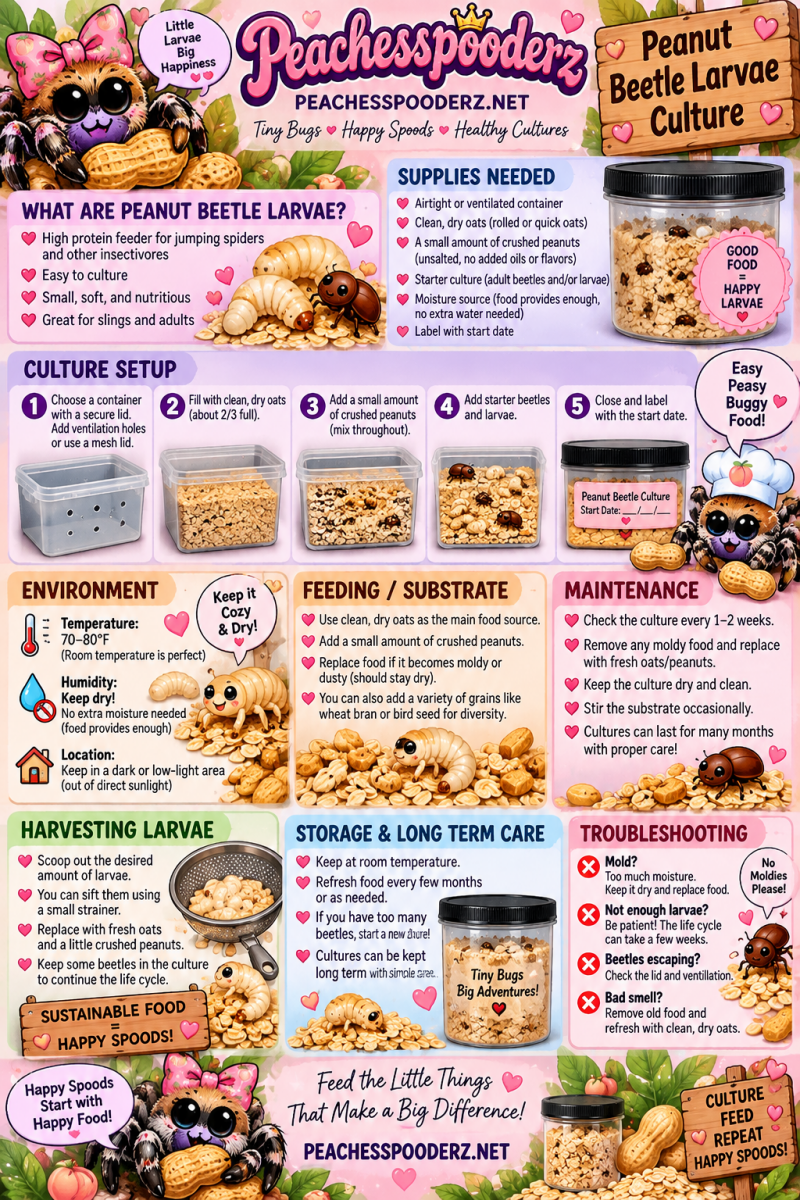
Peanut beetle larvae (Ulomoides dermestoides) are one of the most convenient, nutritious, and safe feeder options for jumping spiders. Small, slow-moving, and easy to cultivate, they make feeding your spooder stress-free. Learn everything you need to know about housing, maintaining, and feeding these gentle feeder insects below.

Frequently asked questions

Find clear answers on cultivating, harvesting, and serving peanut beetle larvae to keep your jumping spiders healthy, happy, and well-fed.
How many larvae should I feed my spider at once?

A typical serving is about 3 larvae per feeding session, depending on your jumping spider's size and abdomen fullness. You can place them on a feeding ledge or gently offer them with blunt tweezers.

What is the most common mistake keepers make?

The most common mistake is feeding out the larvae too quickly without letting the culture grow and establish. Give your starter colony time to reproduce so adult beetles can lay eggs, ensuring a continuous supply of larvae for months to come.

Do I feed the adult beetles or just the larvae?

Jumping spiders prefer the soft, wriggling larvae. The adult beetles have a hard shell and can emit a bitter taste, so it is best to leave the beetles inside the tub to breed and sustain your feeder colony.

Why are peanut beetle larvae a great feeder for jumping spiders?

Peanut beetle larvae are soft-bodied, slow-moving, and much less likely to hurt your spider compared to aggressive or fast prey like crickets and mealworms. Their gentle nature ensures your jumping spider can hunt safely without risk of injury.

How do I set up housing for my peanut beetle culture?

Housing them is very simple. All you need is a breathable plastic box or tub with ventilation holes. Fill the bottom with a layer of rolled oats or oatmeal as bedding and food, and keep the tub in a warm, dark room away from direct sunlight.

What should I feed the beetle culture?

The main substrate is oatmeal, which serves as dry food. For hydration and nutrition, add small fresh slices of carrot once a week. Be sure not to over-moisten the enclosure to avoid mold growth.